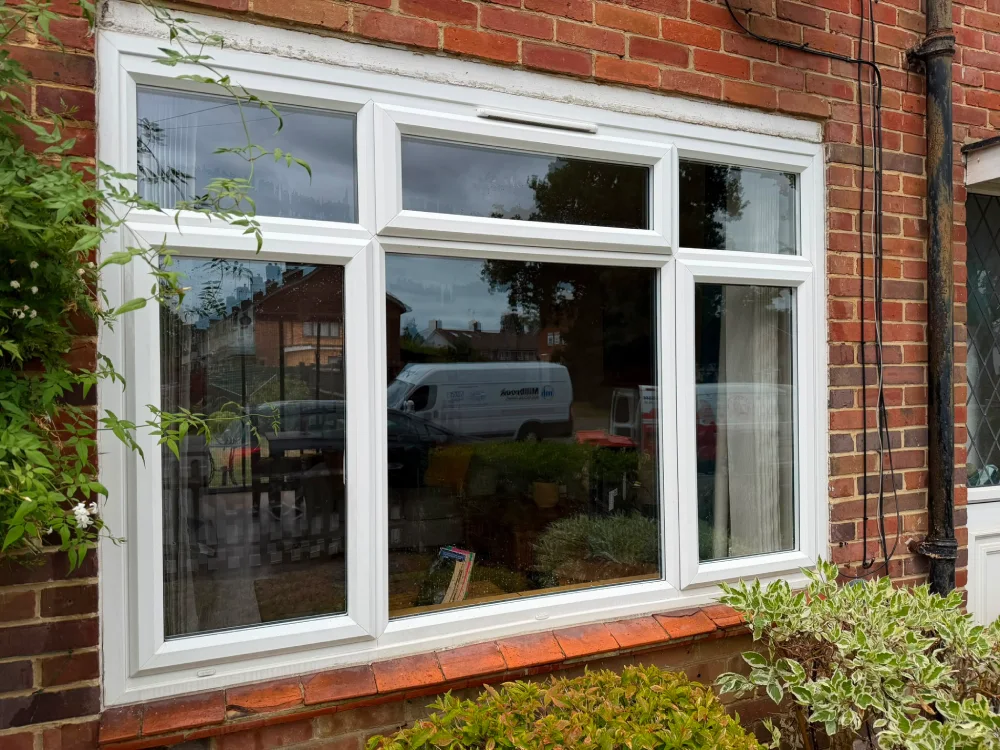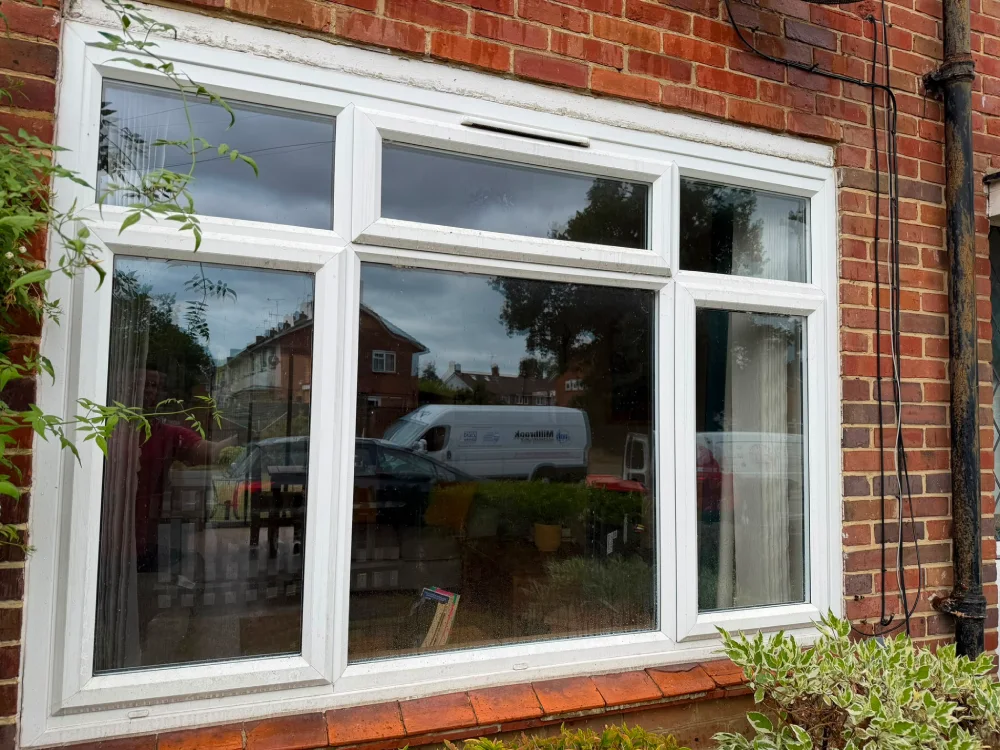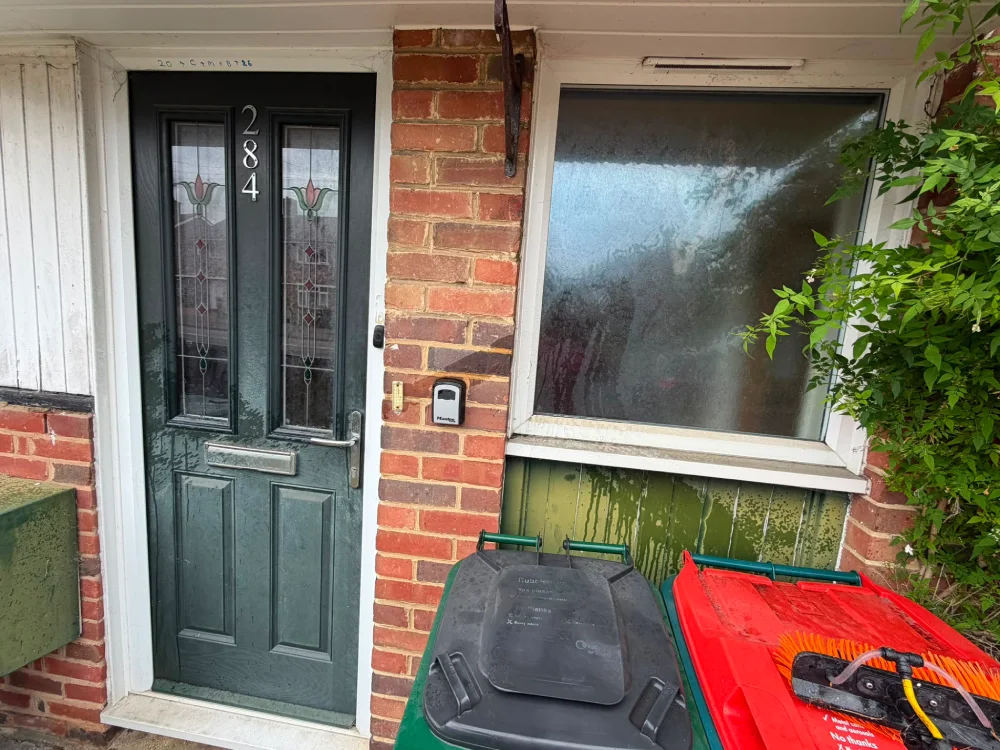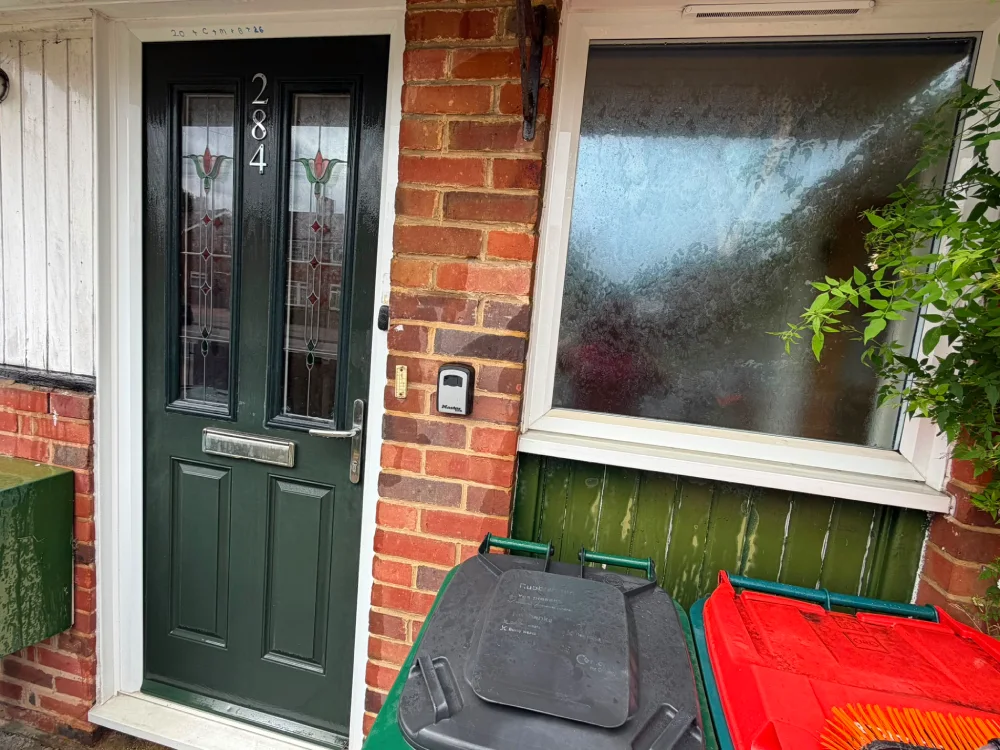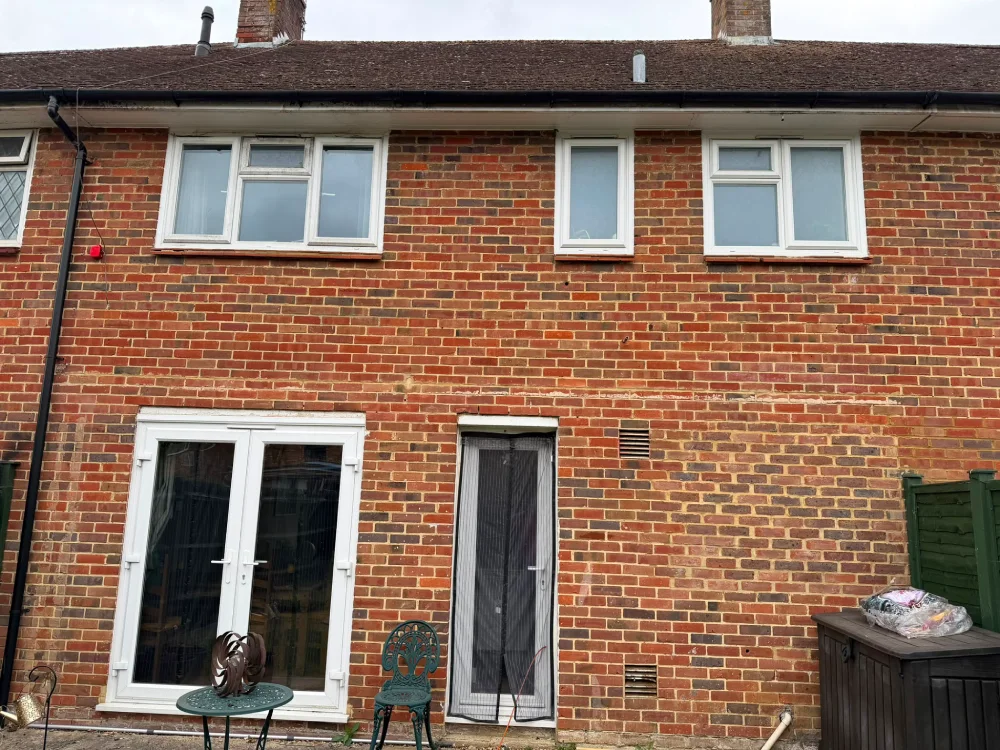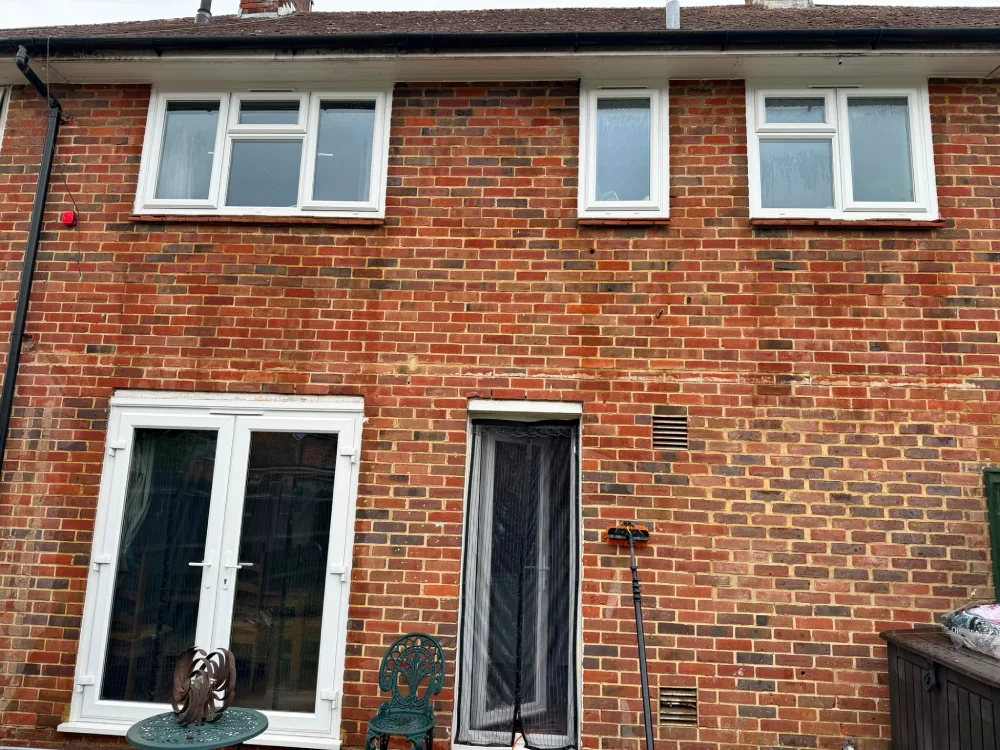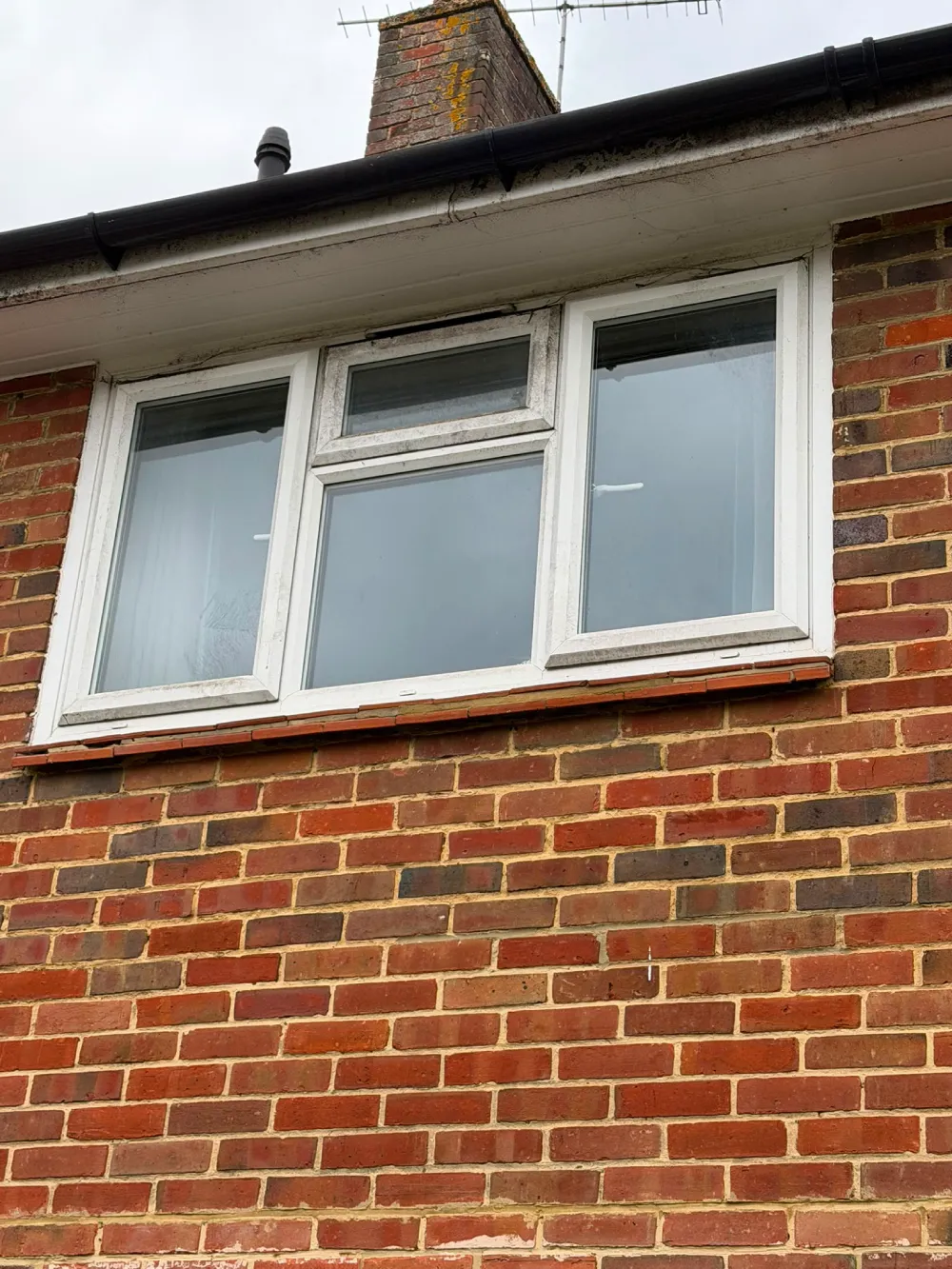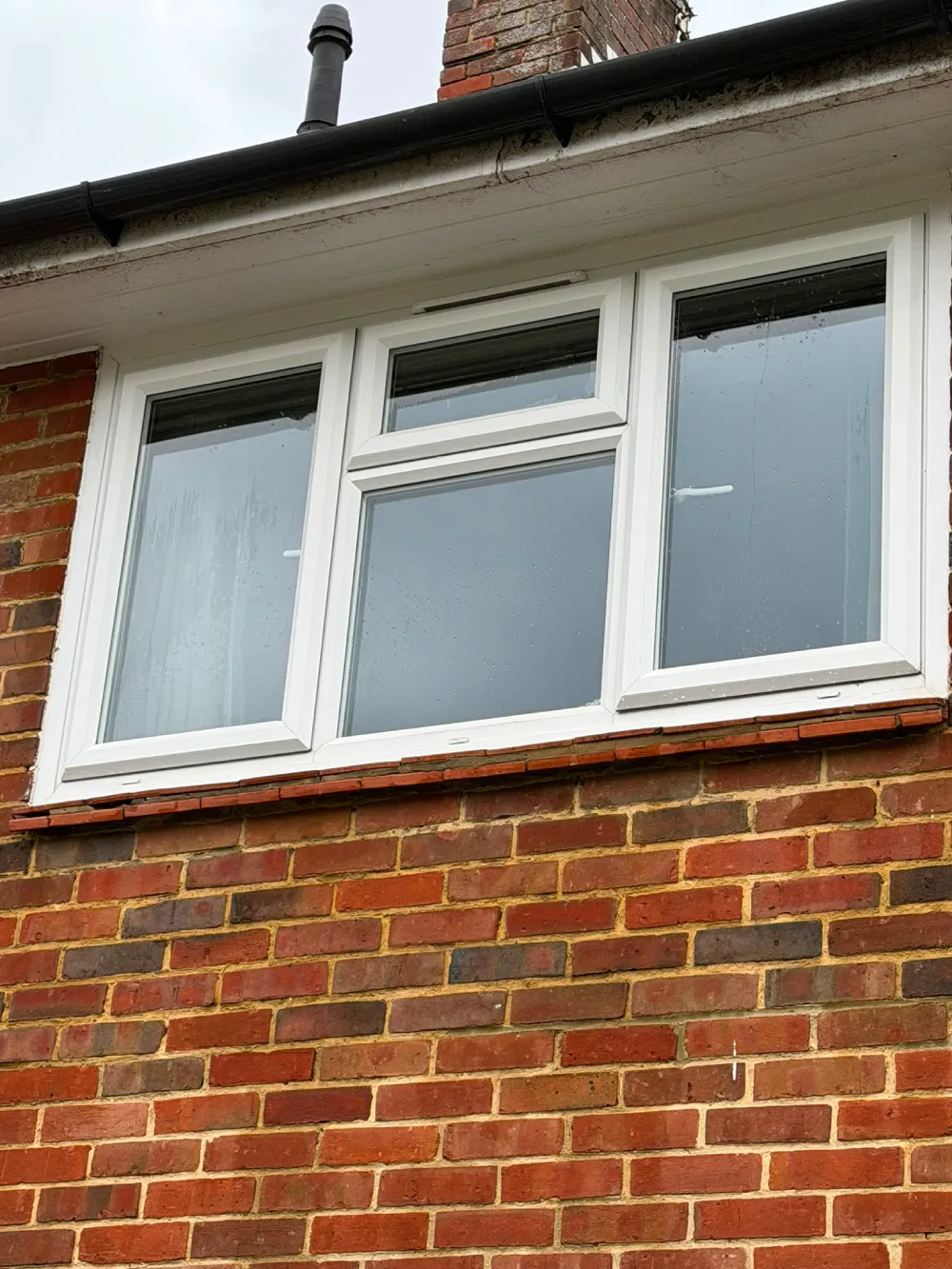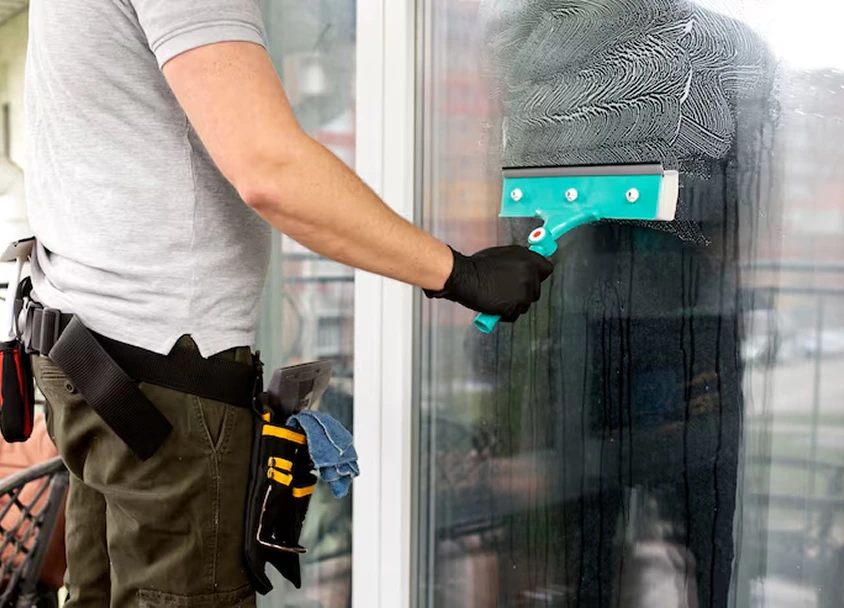





Reach & Wash is the equipment and method behind almost everything Trendline does. It’s not a separate service you book on its own, it’s the system that makes ground-based, ladder-free cleaning possible across windows, gutters, soffits, fascias, cladding, and conservatory roofs. If you’re curious how it actually works, or why it’s the method we use rather than a squeegee and a bucket, this page explains it.
What Is the Reach & Wash System?
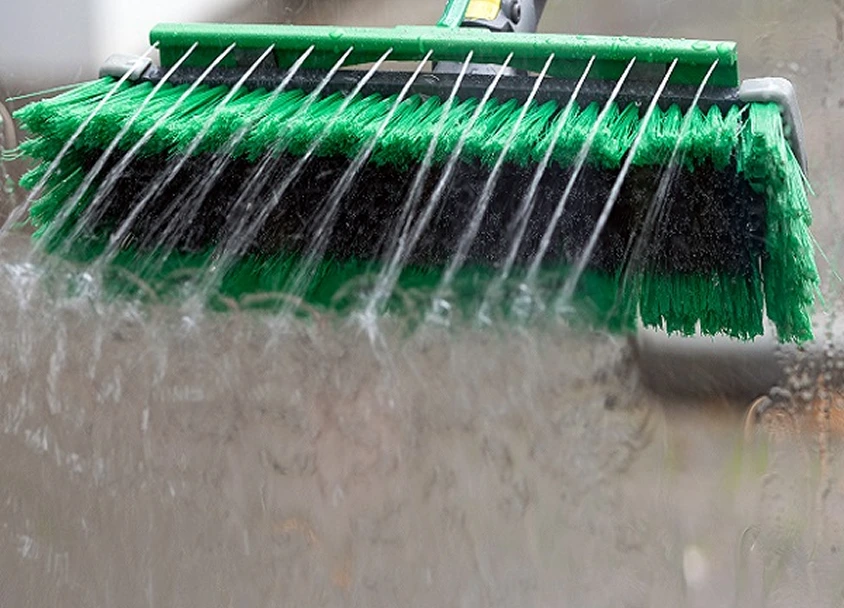
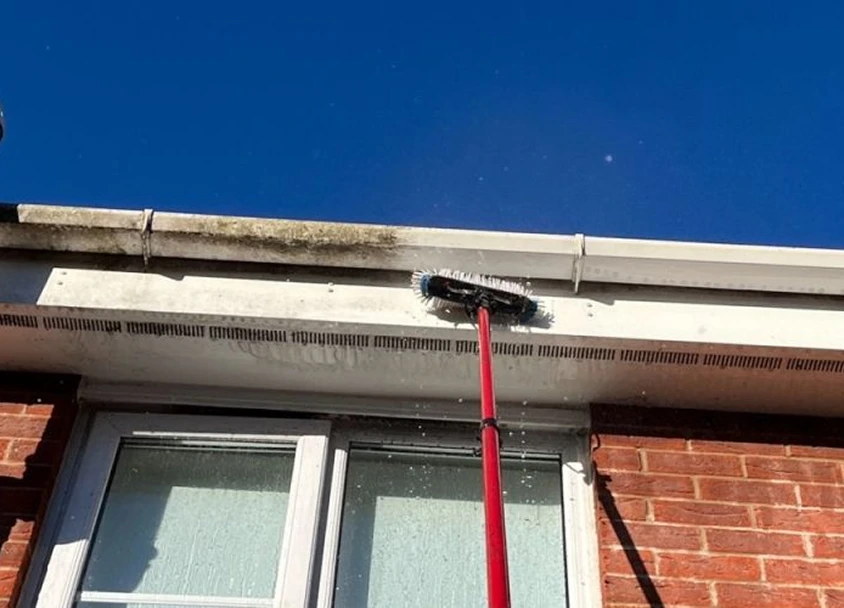
Reach & Wash is a water-fed pole system mounted on our vehicles, designed to clean glass and exterior surfaces from ground level rather than from a ladder. Purified water is stored in tanks on the van, pumped through a hose, and delivered up a telescopic pole fitted with a soft brush head. The operator controls the pole from the ground, working the brush across the surface being cleaned while water flows continuously through it, loosening dirt and rinsing it away in the same motion.
It’s the same basic technology used by most professional window cleaners who’ve moved away from traditional methods, though the quality of the water purification and the condition of the equipment varies considerably between companies. We run four fully equipped Reach & Wash vehicles across our South East coverage area.
How Does Pure Water Cleaning Actually Work?
Purifying the Water
Tap water contains dissolved minerals, calcium and magnesium mainly, that leave behind streaks and spots as it evaporates. This is why traditional window cleaning uses detergent, to compensate for that mineral residue rather than eliminate it. Our vans carry water that’s been through a purification process to strip out those minerals before it ever reaches a window or a gutter. What’s left is essentially demineralised water, with nothing added, no soap, no chemicals.
Cleaning From the Ground Up
Because the water itself is pure, it doesn’t need detergent to avoid leaving marks. It’s pumped up the pole, agitated against the surface by the brush head, and rinsed away, then left to dry naturally. Since there are no minerals in the water, it dries completely clear rather than leaving the streaks or spots you’d get from a hose or an unfiltered wash. The pole itself extends far enough to reach second and third-storey windows, gutters, and rooflines without anyone needing to leave the ground.
Why Use This Instead of Ladders or Chemicals?
Ladders are the traditional way to clean anything above ground-floor height, and they come with two problems: risk to the person using them, and risk to the property. A ladder leaned against a gutter or a fascia board can crack or dent it, and ladder feet on a flower bed or a driveway aren’t exactly gentle either. Working from the ground removes that risk entirely, there’s simply no ladder involved in the vast majority of jobs we do.
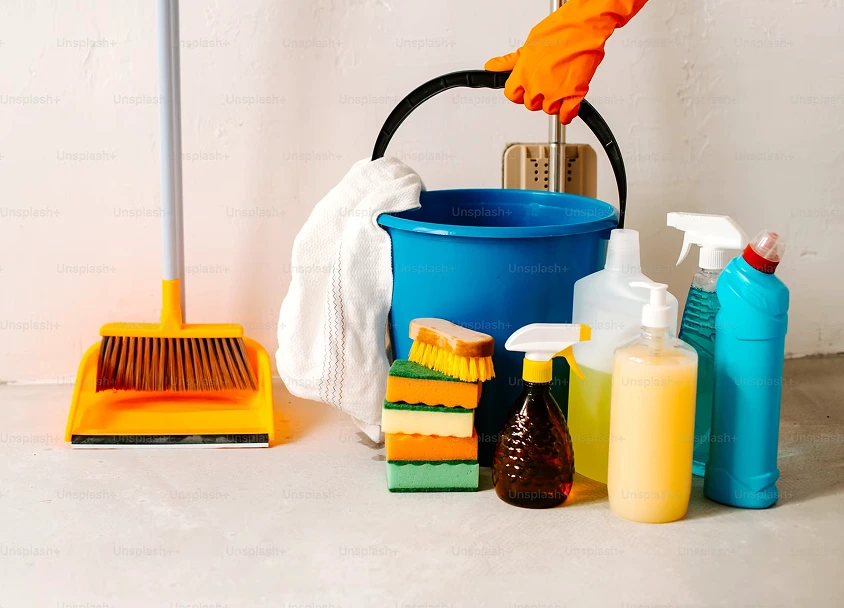
Chemicals solve a different problem than the one they’re usually used for. Traditional window cleaning detergent exists mainly to compensate for the streaking caused by mineral-heavy tap water, not because chemicals are inherently necessary to clean glass. Since our water is already purified, there’s nothing to compensate for, which means no chemical residue on your windows, no runoff into flower beds or drains, and nothing that needs to be kept away from children or pets while it dries.
Where Else Do We Use This System?
Reach & Wash isn’t limited to windows. The same pole and brush head setup is used across most of what we do:
- Residential and commercial window cleaning — glass, frames, and sills cleaned in one pass
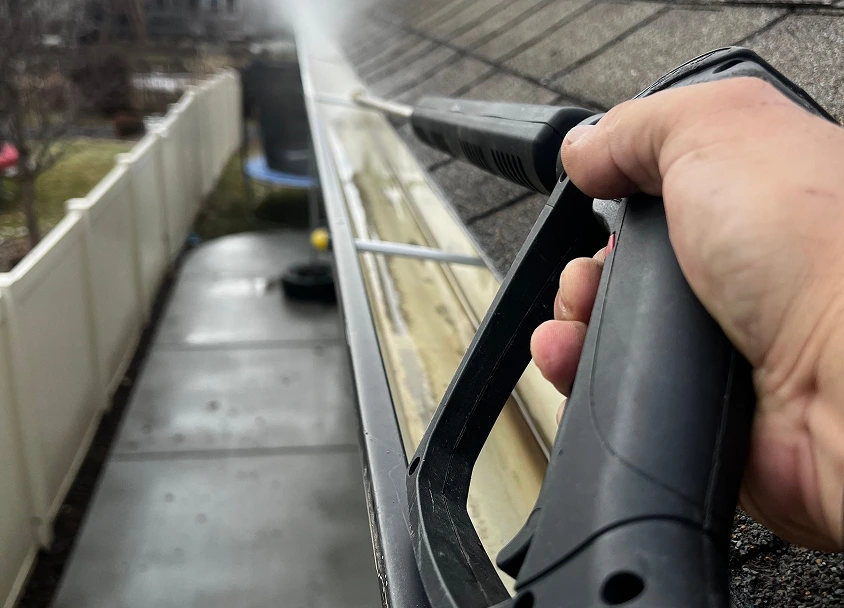
- Gutter cleaning — brush and vacuum attachments clear debris from the same pole system
- Soffit, fascia, and cladding cleaning — a gentler alternative to pressure washing that won’t force water behind panels
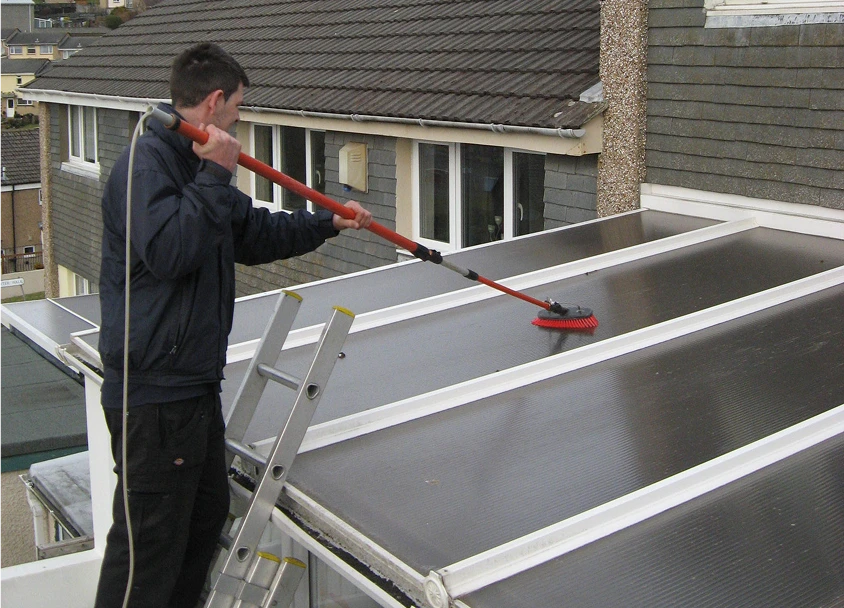
- Conservatory roof cleaning — reaches pitched glass and polycarbonate roofs without anyone climbing onto the structure
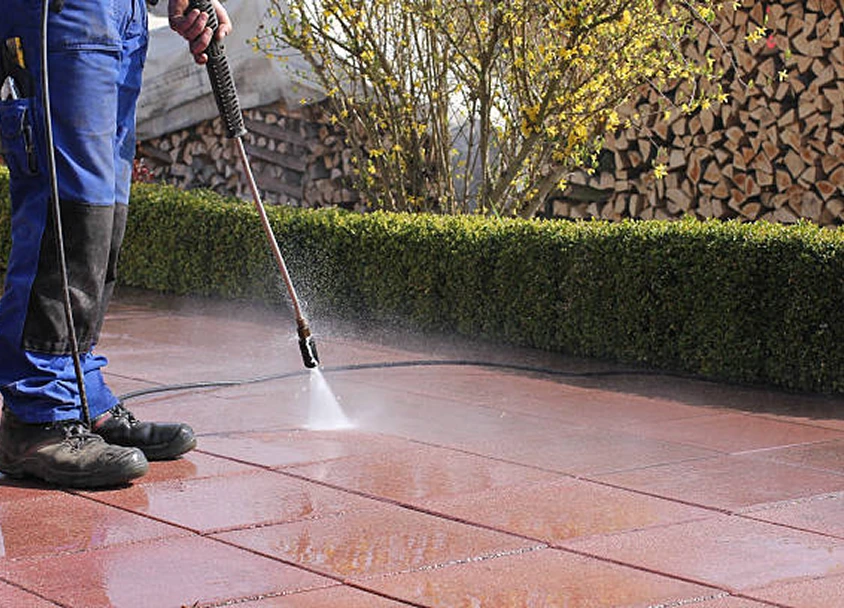
Jet washing is the one exception. Driveways, patios, and other hard ground surfaces need a different kind of pressure and equipment entirely, so that’s handled separately rather than through the pole system.
Is Pure Water Cleaning Safe for Older or Delicate Surfaces?
Leaded and Georgian Windows
Older leaded and Georgian-style windows are often avoided by traditional cleaners, since a squeegee doesn’t work well around glazing bars and a ladder is risky against fragile, older frames. The brush head on a Reach & Wash pole works around glazing bars without the scraping motion a squeegee needs, which makes it better suited to this style of window rather than worse.
Older Brickwork and Render
Because there’s no high pressure involved, the system is gentle enough for older brickwork, render, and painted surfaces that could be damaged by a pressure washer. This is part of why the same equipment is used for soffit and fascia cleaning as for windows, both benefit from a controlled, low-force approach rather than anything aggressive.
Frequently Asked Questions
Is pure water cleaning as effective as using chemicals?
Yes. The purification process removes the minerals that cause streaking, which is the main reason detergent is used in traditional cleaning. Pure water alone achieves a streak-free result without it.
Can this system reach every window on my property?
In most cases, yes, up to a height that covers standard two and three-storey homes. If a property needs rope access or scaffolding to reach certain areas, we'll say so during the quote rather than after the job's started.
Is the water safe for plants, pets, and children?
Yes. Since there are no chemicals or detergents involved, there's nothing harmful in the runoff.
Does this system work on all types of glass and surfaces?
It's suitable for standard glass, leaded and Georgian windows, uPVC, painted timber, cladding, and most conservatory roof materials. Jet washing is used separately for hard ground surfaces like driveways and patios.
Why don't all window cleaners use this method?
Good equipment and proper water purification are a real investment, so some smaller operators stick with traditional ladder-and-squeegee methods instead. It's also a different skill set to learn, working a long pole accurately takes practice.