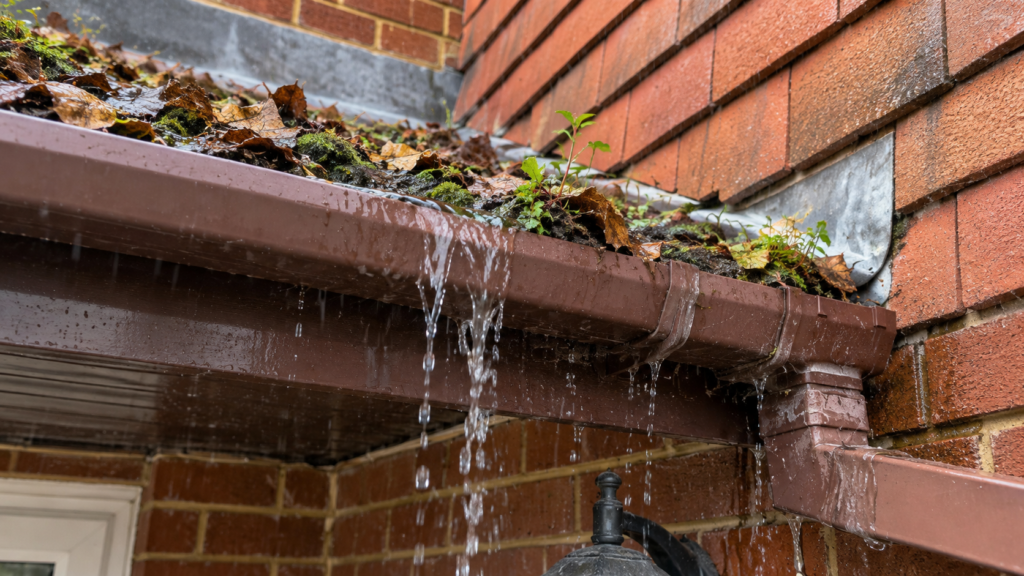
Water pouring over the edge of a gutter in the rain is easy to ignore, because it stops as soon as the rain does. The problem is where that water goes. Instead of running into the downpipe and away to the drain, it runs down your walls, soaks the ground next to the house and finds its way into timber and brickwork.
Most overflowing gutters are blocked, and a gutter clean sorts them out. Some have a different fault, such as a gutter that has lost its slope or a joint that has failed, and those need a repair. This guide explains the common causes, what the overflow point tells you and how to tell the two apart.
Why Are My Gutters Overflowing?
There are six common reasons a gutter overflows. Often more than one is involved, for example a partly blocked gutter with one sagging section.
Leaves, moss and debris in the gutter
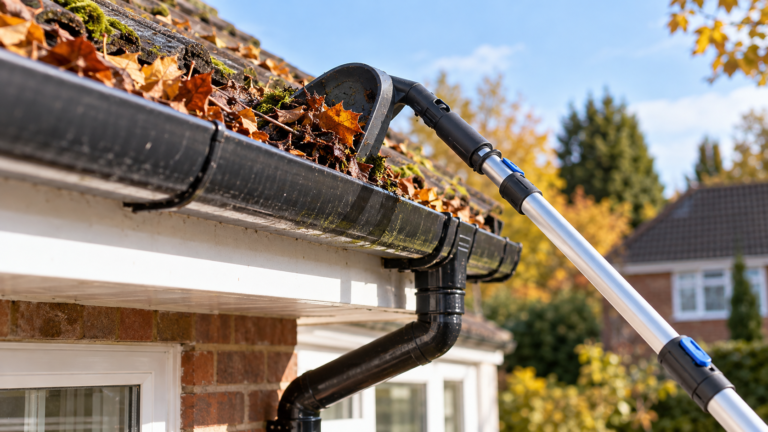
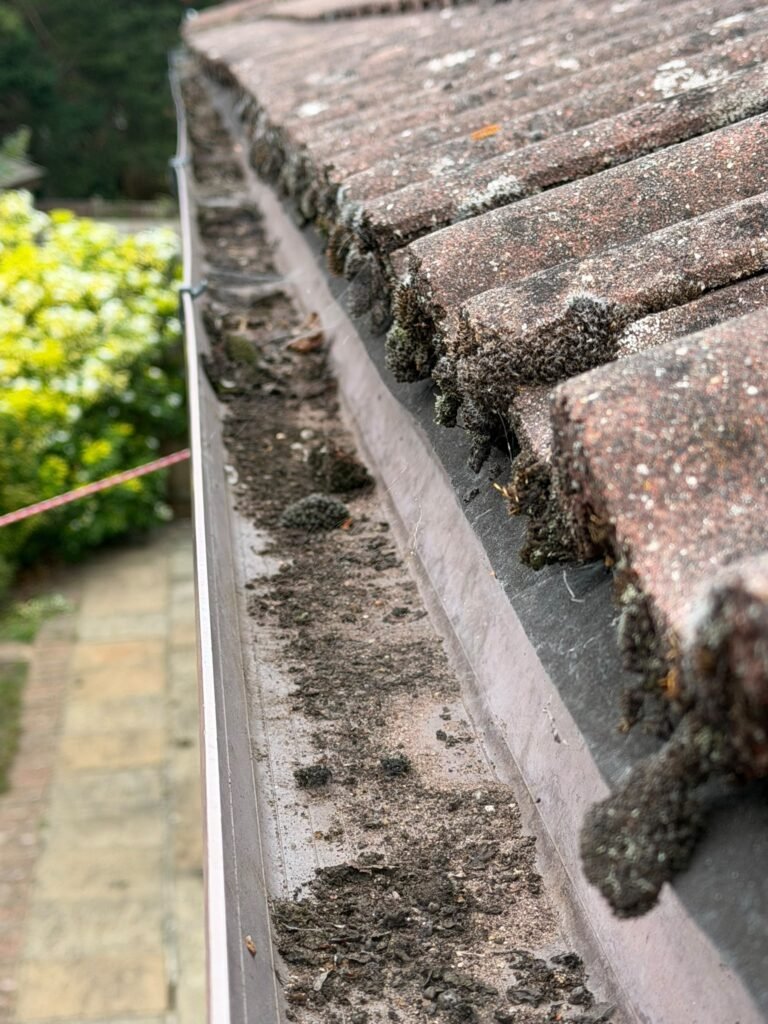
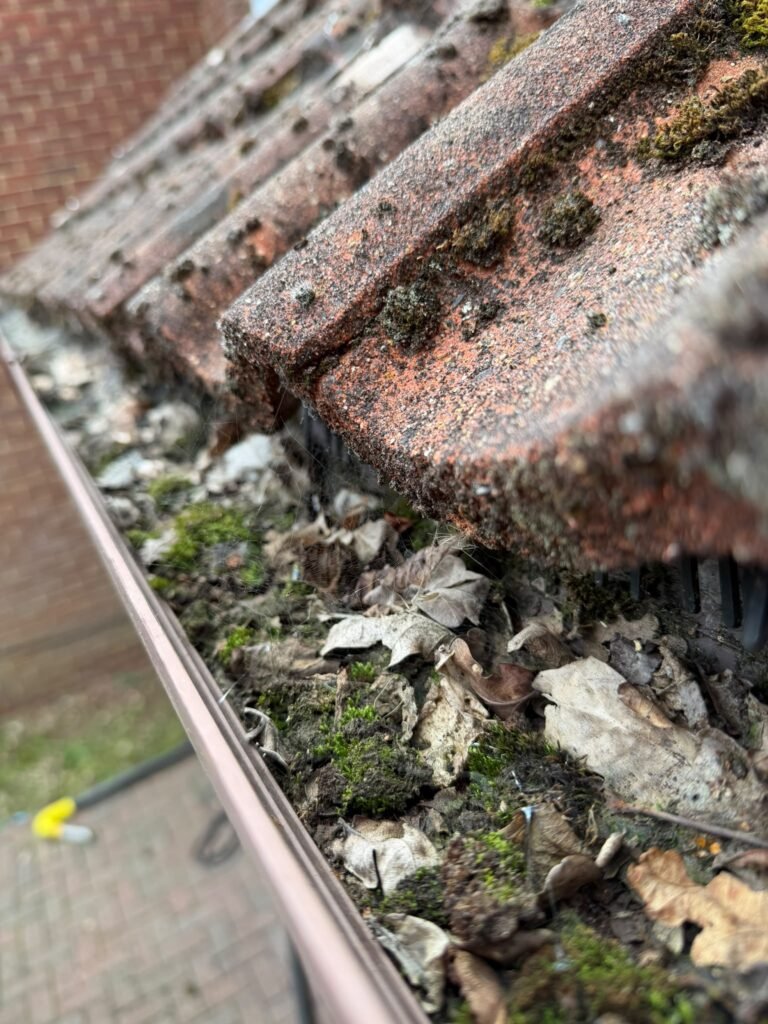
This is the most common cause. Leaves, moss washed off the roof, grit from the tiles and seeds build up along the gutter and around the outlet. Over time they break down into a wet sludge that holds water and slows the flow until the gutter spills over in heavy rain.
A blocked downpipe
A gutter can look clear and still overflow if the downpipe is blocked. Leaves and moss collect at the outlet, in the bends of the pipe or at the shoe at the bottom. Water then backs up into the gutter and spills over, usually close to the downpipe.
The gutter has lost its fall
Gutters need a slight slope towards the outlet so water runs to the downpipe. If the gutter is level or slopes the wrong way, water sits in it and spills over the lowest point. Kalsi Plastics gives a fall of about 3 mm per metre towards the outlet as a guide for plastic guttering.
Sagging gutters and loose brackets
Brackets hold the gutter in place on the fascia board. If a bracket works loose, breaks or pulls out of soft timber, the gutter drops and forms a low spot. Water collects there, and the extra weight can pull the next bracket loose too.
Leaking joints
Plastic gutters are joined with unions that have a rubber seal inside. As the seals age they harden and crack, and water starts to drip or run from the joint. This is often mistaken for overflow, because the water appears in the same place every time it rains.
Water overshooting the gutter
In heavy rain, water can run off a steep roof fast enough to jump over the gutter altogether. Moss on the roof edge or a gutter fitted too low or too far back can make this worse. Here the gutter itself may be clear and working.
What the Overflow Point Tells You
Where the water spills over is a useful clue to the cause. Watch the gutter from the ground the next time it rains heavily:
- Near the downpipe: the outlet or the downpipe itself is likely blocked.
- In the middle of a run: debris has built up there, or the gutter has sagged into a low spot.
- Along the whole length, only in heavy rain: the gutter may be too small for the roof, or water is overshooting it.
- At the same joint every time: the seal in the union has probably failed.
- Behind the gutter, down the wall: the gutter may have pulled away from the fascia, or water is getting behind it at the roof edge.
Signs of Damage From Overflowing Gutters
Overflow rarely causes a problem overnight. The damage builds up over months and years, often out of sight. Look out for:
- Damp patches inside: on walls or ceilings near the eaves, usually below the overflow point.
- Wet or stained walls outside: dark streaks on brickwork that stay damp after the rain stops.
- Green algae on render: a green or black stain spreading down from the gutter line.
- Rotten fascia boards: soft, flaking or swollen timber behind the gutter.
- Puddles along the house: water pooling next to the walls or splashing back up onto them.
Stains on fascias and soffits can usually be washed off once the overflow has stopped. See our soffit, fascia and cladding cleaning service if the roofline has gone green or black.
Cleaning Job or Repair Job?
The first step with an overflowing gutter is almost always to clear it. That fixes the problem in most cases, and if it does not, a clear gutter makes the real fault easier to see.
Problems a gutter clean fixes
- Debris in the gutter: leaves, moss, silt and plants removed from the full length.
- Blocked outlets: the opening into the downpipe cleared.
- Blocked downpipes: the pipe cleared so water can run through it again.
Problems that need a repair
- Wrong fall: the gutter needs re-hanging so it slopes towards the outlet.
- Sagging sections: brackets need replacing or adding, and any rotten fascia behind them fixing.
- Leaking joints: seals or unions need replacing.
- Undersized gutters: a larger gutter or an extra downpipe may be needed.
If your gutters keep overflowing after a professional clean, the cause is likely one of the repair problems above. In that case a roofer or guttering specialist is the right person to call.
When to Deal With an Overflowing Gutter
The sooner the better, but timing matters for a lasting fix. Clearing a gutter in early autumn, before most of the leaves have fallen, can mean it fills again within weeks. The most useful time for a clean is late autumn, once the leaves near your home are down, and again in spring.
Winter is the hardest time to put things right. Frozen debris is heavy and difficult to shift, ladders are unsafe on icy ground, and water trapped behind a blockage can freeze and split the joints. If a gutter is overflowing badly in winter, it is still worth clearing it on a dry, frost-free day rather than waiting for spring.
If water is coming into the house, do not wait for the next scheduled clean. Damp that is caught early is far easier to deal with than damp that has soaked into plaster and timber.
What You Can Check Safely From the Ground
You can learn a lot about your gutters without climbing a ladder. These checks are safe to do from the garden or the street:
- Watch in heavy rain: note where water spills over and whether it comes from the edge, a joint or behind the gutter.
- Check the downpipes: during rain, water should run steadily out of the bottom of each downpipe.
- Look along the gutter line: from a distance, check for dips, sagging sections or gaps between the gutter and the fascia.
- Look for plants: grass or weeds growing from the gutter mean it is packed with debris.
- Check the walls: look for damp streaks, green stains or flaking paint below the gutter.
If any of these point to a problem, avoid climbing onto the roof or leaning out of upstairs windows to look closer. Working at height is where the risk is.
How to Stop Gutters Overflowing Again
Once the gutters are clear and any faults are repaired, a little upkeep stops the problem coming back:
- Clean them regularly: most homes need a clean at least twice a year, in late autumn and spring.
- Clean more often under trees: homes with trees overhanging the roof may need three or four cleans a year.
- Check after storms: a quick look from the ground after a big autumn storm catches blockages early.
- Consider gutter guards: they keep out larger leaves, but still need checking, as fine debris and moss build up on top.
Homes close to parks, woodland or tree-lined streets see the most blocked gutters in autumn. We clean gutters across Surrey, Kent and Sussex, including Sevenoaks and Tonbridge.
Get a Free Gutter Cleaning Quote
We are a fully insured limited company, and all our work is covered by our 100% satisfaction guarantee. If you are not happy with the result, we come back and re-clean the same or following day, free of charge.
Call +44 7471 159219 or visit our gutter cleaning page to request a free quote.